1 / 3

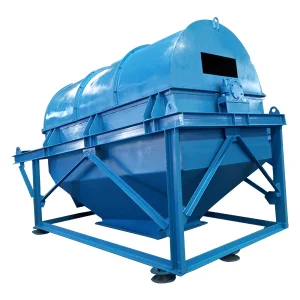
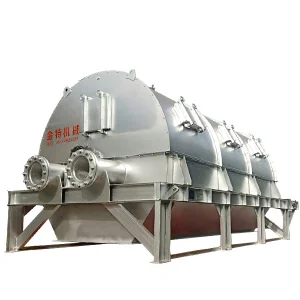
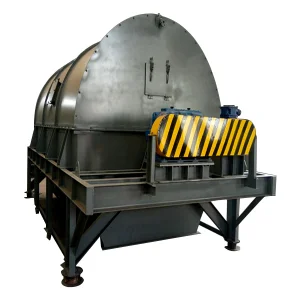
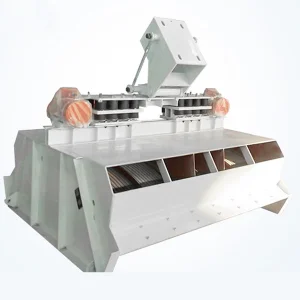
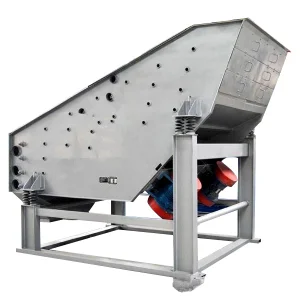
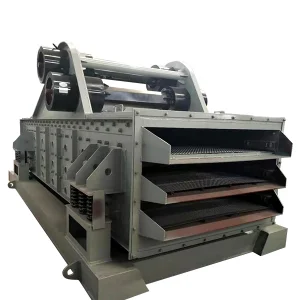
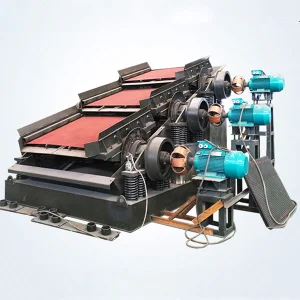
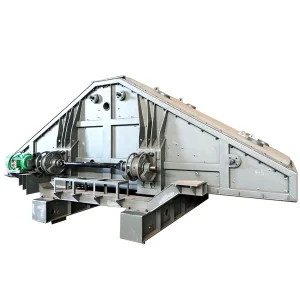
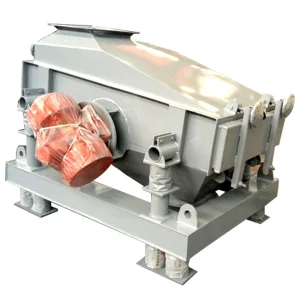
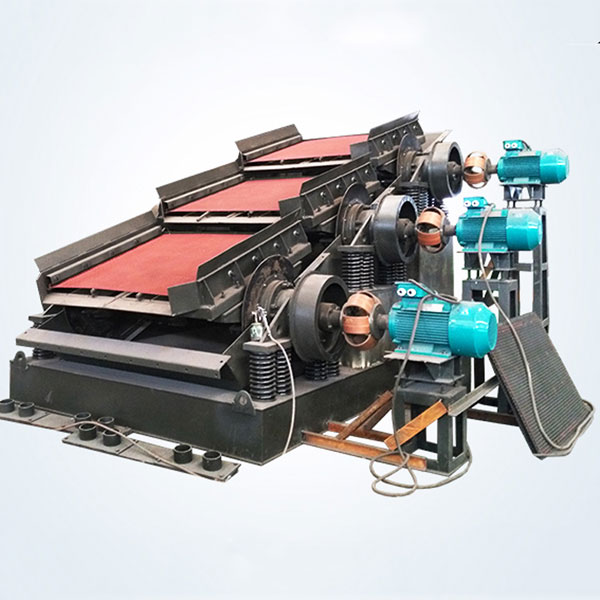
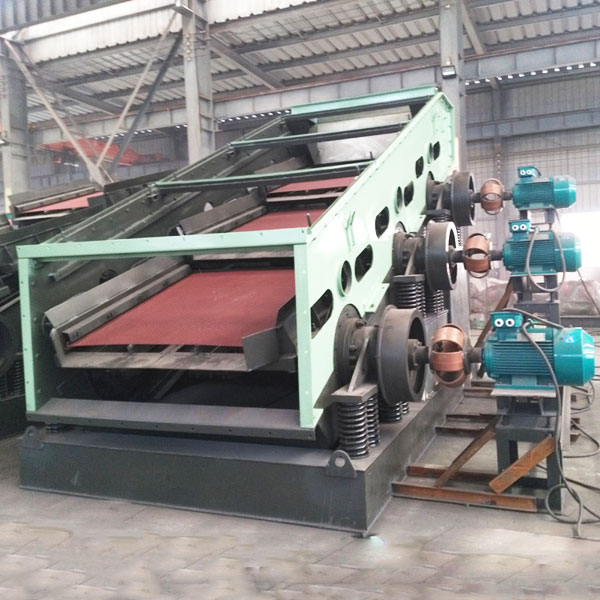
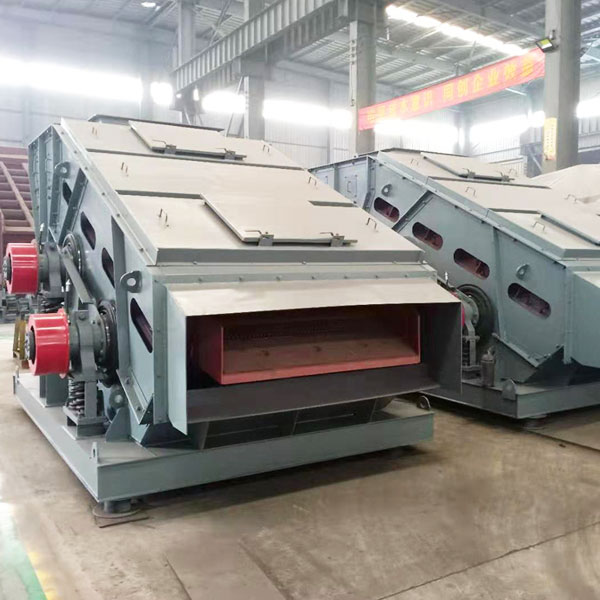
The unit composite screen is different from the traditional vibrating screen. The side plate, top cover and base of the screen machine are fixed parts, only the screen and vibration exciter assembly participate in the vibration.
Secondary Vibration Advantage: The vibrating screen mesh is composed of special steel bars and frames, and the bars are arranged longitudinally. In addition to the vibration of the whole sieve mesh, there is an activity gap for each rod, and the secondary vibration can eliminate the bonding problem of wet coal to the sieve mesh to the greatest extent.
Environmental Protection: Under the working and mining conditions of coal-fired power plants, the vibrating screen is generally made into a closed structure, so that the dust cannot be released, responding to strict environmental protection requirements.
Dynamic Stress Reduction: Because the screen body does not vibrate and the screen mesh vibrates, the dynamic stress of the sieve machine is reduced to the minimum. This allows the amplitude to be greatly increased while the dynamic load is significantly reduced.
Efficiency & Cost: The shaker screen has few vibration parts and is the least powerful of all screen machines. Mesh bars are easily worn parts, but the cost of bars is low. The low running cost is incomparable with traditional screen machines.
Intelligent Control: Generally, the vibro screen is driven by 1-6 motors, with a starting time interval of 6-8 seconds. The machine starts in a forward direction and stops in a reverse direction to achieve the goal of empty car starting. The electrical control system manages the whole equipment's start, stop, manual control, and remote control actions.
| Model | Motor Power (Kw) | Amplitude (mm) | Feeding Granularity (mm) | Sieve Pore (mm) | Processing Capacity (t/h) | External Dimensions (L*W*H mm) |
|---|---|---|---|---|---|---|
| JFHS1536 | 2*4 | 6-15 | ≤500 | 3-50 | 350 | - |
| JFHS1545 | 2*7.5 | <80 | 3-50 | 100 | - | |
| JFHS1550 | 4*3.0 | 0-150 | 5-50 | 100-250 | 5300*3600*4000 | |
| JFHS1840 | - | 0-150 | 5-50 | - | - | |
| JFHS1850 | 4*4.0 | 0-150 | 5-50 | 150-200 | 5300*3900*4000 | |
| JFHS2050 | 6*5.5 | 0-150 | 5-50 | 220-280 | 5300*4100*4000 | |
| JFHS2250 | 4*7.5 | 0-150 | 5-50 | 300-400 | 5300*4400*4200 | |
| JFHS2550 | 4*7.5 | 0-150 | 5-50 | 350-650 | 5300*4800*4200 | |
| JFHS2575 | 6*7.5 | 0-150 | 5-80 | 550-900 | 8000*4800*5400 | |
| JFHS25100 | 8*15 | 0-150 | 5-80 | 550-1200 | 10000*4800*5400 | |
| JFHS25125 | 10*7.5 | 0-150 | 5-80 | 550-1400 | 12500*4800*5700 |